A DELIVERED PLUMBING WEBSITE
How we structured L&B’s first website
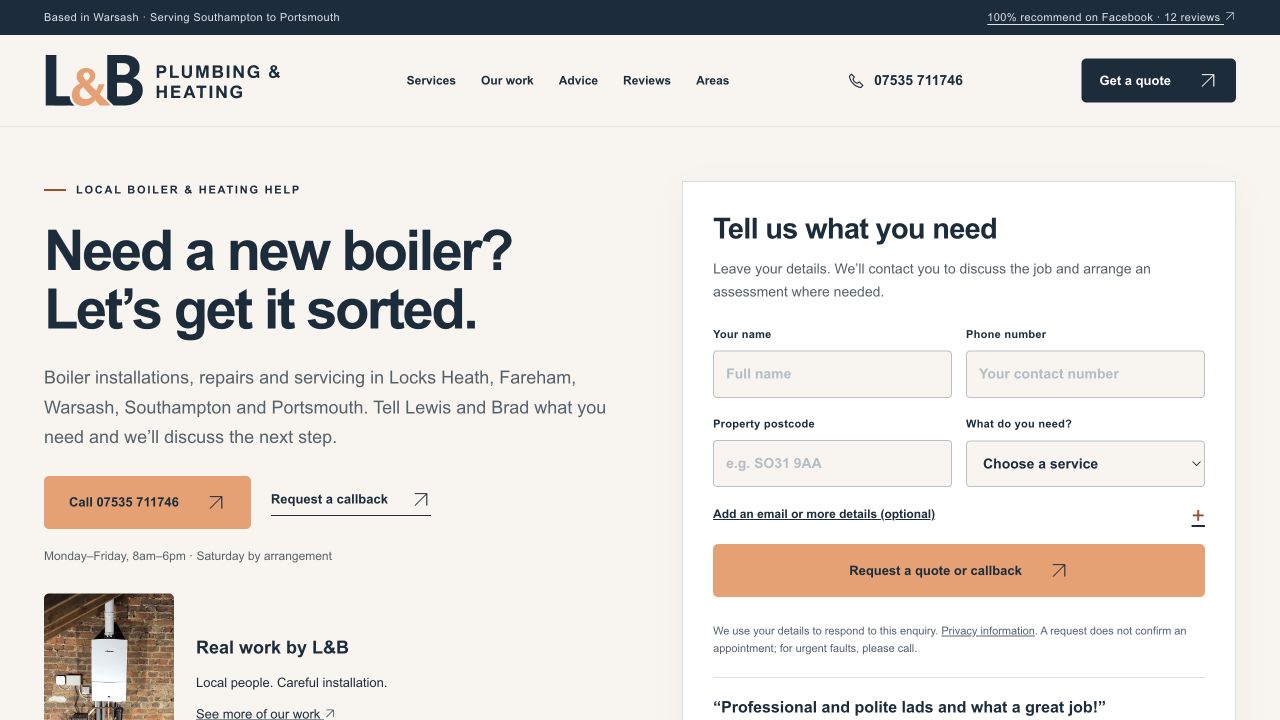
L&B Plumbing & Heating is a Warsash business run by Lewis and Brad. Its website is a practical example of the structure we can discuss with a plumbing business: separate services, genuine work photographs, clear coverage and an enquiry route.
| Customer need | Page and contact route | Information before an enquiry |
|---|---|---|
| A replacement boiler | Dedicated installation page and a quote form. | What affects the quote, the assessment and the current heating system. |
| A boiler fault | Dedicated repairs page with a call or callback route. | Symptoms, postcode and availability, without promising an emergency appointment. |
| Annual maintenance | Dedicated servicing page and a service request. | Make, model, service history and any existing faults. |
That separation lets the website answer the question behind the search. Your own page list should reflect services you actually offer, with qualifications and promises checked by your business.
See the L&B website case study and dated evidence. Explore the website design scope or our local SEO approach.
Bring a useful website brief
Use our plumbing website brief to organise services, coverage, work photographs, account ownership and the enquiries you want. It helps define a project before anyone quotes.
SCOPE OF SUPPORT
What we can help with
- Repair and installation service pages
- Local coverage and clear callout availability
- Real plumbing projects and customer feedback
- Enquiry routes that capture the job and location
Your proposal confirms the scope, bespoke price and any ongoing commitment before work begins.
Choose the plumbing work you want more of
A leaking tap, a bathroom refit and a landlord maintenance contract are different enquiries. We start by agreeing which work is commercially useful, your minimum job size and the areas you can cover. If you do not offer emergency callouts, your website and advertising should say so rather than attracting calls you cannot take.
Build service pages that answer practical questions
Repair pages need clear coverage and contact routes. Bathroom and installation pages need photographs, an explanation of the work and what happens before a quote. We organise these separately so customers can understand your offer. Genuine project examples, accurately described qualifications and clear business details help them assess who they are contacting.
Connect local search with a useful enquiry route
Local SEO and an accurate Google Business Profile help explain what you do and where you work. Paid search can focus on selected plumbing services with location controls and exclusions for irrelevant searches. Advertising needs to match your availability: paying for calls while nobody can answer wastes an opportunity.
Ask for enough detail to qualify the job
A useful plumbing enquiry might include the postcode, issue, urgency and photographs where the agreed enquiry system supports them. We plan contact options around how you work. You decide which jobs to accept and provide the technical advice and quote; the website helps customers take that first step.
Learn from booked work, not just phone calls
We can review tracked enquiries alongside your feedback on unsuitable locations, small jobs and completed work. That shows where to refine targeting and content. L&B Plumbing & Heating is our published example of a first website with service pages and local search foundations; the case study does not claim measured lead growth.
Plan your website and search visibility
For plumbers, start by choosing the work the website needs to explain, then match it to real projects and a suitable contact route. Use our website quote checklist to compare scope and our local SEO checklist to review the search foundations.
See how trade businesses can improve and measure AI search visibility.